
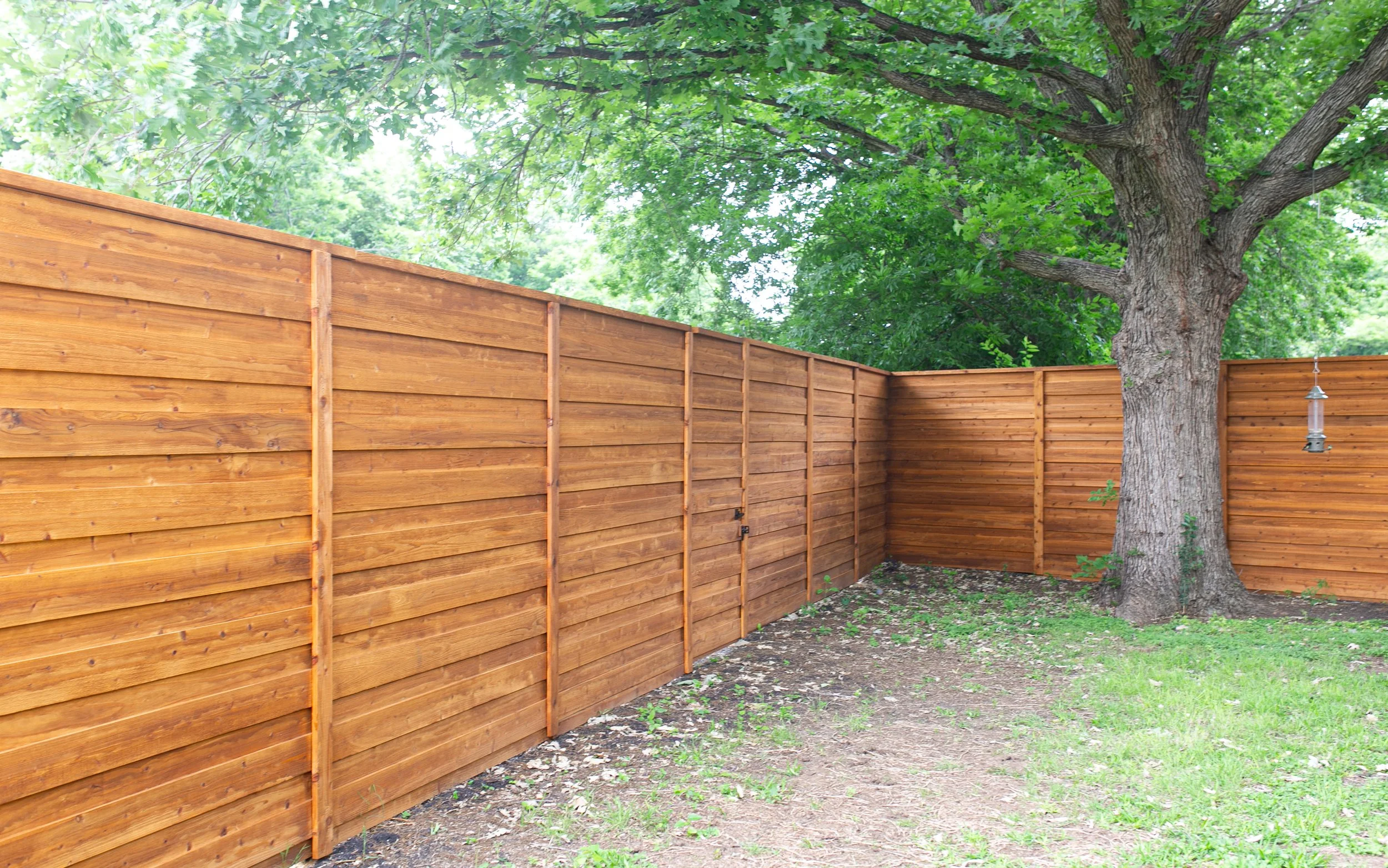

Want to build a taller privacy fence around your backyard?
Before ordering lumber, there’s one number every London homeowner should know:
7 feet.
Under the City of London’s Fence By-law, a residential fence generally cannot exceed 2.13 metres (7 feet) in height.
But that’s not the whole story.
Where the fence is located matters, especially around driveways and corner lots. Privacy screens also have different rules from ordinary fences.
Here’s what London homeowners need to know before building.
Quick Answer: How Tall Can Your Fence Be?
| Location / Structure | Maximum Height |
|---|---|
| Typical Residential Fence | 7 ft (2.13 m) |
| Corner Visibility Triangle | 3 ft (0.9 m) |
| Driveway Visibility Triangle | 3 ft (0.9 m) |
| Qualifying Privacy Screen | 9 ft 10 in (3 m) |
| Certain Industrial/Commercial Fences | 10 ft (3 m) |
For most homeowners asking about a normal backyard privacy fence, the answer is simple:
Up to 7 feet.
The biggest exceptions involve visibility near driveways and intersections, privacy screens, special exemptions, and certain non-residential properties.
The Standard Residential Fence Limit Is 7 Feet
London’s Fence By-law PS-6 states that a fence on a residential property generally cannot exceed:
2.13 metres
or approximately:
7 feet
That gives homeowners considerably more privacy than a typical 4-foot decorative fence while still putting a clear upper limit on residential fencing.
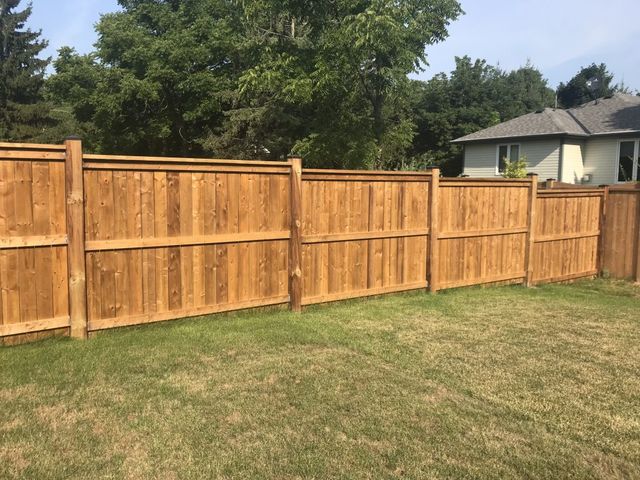
Image source: VanDuzen Fence & Post
A 7-foot fence can provide substantial screening between neighbouring backyards, particularly when combined with a solid privacy design.
How Is Fence Height Actually Measured?
This part matters.
You can’t necessarily add soil around the bottom of the fence and then claim the fence itself is only seven feet tall.
The City’s by-law defines fence height using what it calls effective ground level.
In simplified terms, height is measured from the effective ground level where the posts are embedded up to the highest point of the fence or posts.
If the fence is sitting on top of a retaining wall, the calculation works differently: the fence height is measured from the top of the retaining wall to the highest point of the fence or posts.
Simple Example
Imagine your fence measures:
| Measurement | Height |
|---|---|
| Ground to top of fence | 6 ft |
| Ground to top of post cap | 6 ft 4 in |
| By-law height | 6 ft 4 in |
The posts count.
So if you’re trying to build close to the maximum permitted height, don’t design the fence panels at exactly seven feet and then add taller posts or decorative features without considering the overall height.
Should You Actually Build a 7-Foot Fence?
Just because you can build up to seven feet doesn’t mean every backyard needs it.
For many residential properties, a 6-foot privacy fence is already enough.
Here’s a useful comparison:
| Fence Height | Privacy | Typical Use |
|---|---|---|
| 3 ft | 1/5 | Decorative/front areas |
| 4 ft | 2/5 | Gardens, open boundaries |
| 5 ft | 3/5 | Partial backyard privacy |
| 6 ft | 4/5 | Standard privacy fencing |
| 7 ft | 5/5 | Maximum residential privacy |
A taller fence can block more neighbouring sightlines, but it can also make a smaller backyard feel more enclosed.
6-Foot vs 7-Foot Fence
This is probably the decision most privacy-focused homeowners actually need to make.
A 6-Foot Fence
A six-foot fence is already tall enough to provide excellent privacy in many backyards.
It tends to feel slightly less imposing and can be a good fit when neighbouring properties sit at similar elevations.
A 7-Foot Fence
A seven-foot fence gives you another full foot of screening.
That can be surprisingly noticeable when:
- Your neighbour’s deck is elevated
- Houses are close together
- You’re building around a patio
- You have a pool area
- Your neighbour’s yard sits slightly higher
- You want maximum backyard privacy
Which Should You Choose?
| 6-Foot Fence | 7-Foot Fence | |
|---|---|---|
| Privacy | 4/5 | 5/5 |
| Material Cost | Lower | Higher |
| Wind Exposure | Lower | Higher |
| Open Feeling | Better | Lower |
| Screening | Excellent | Maximum |
| Small Backyard | Often better | Can feel enclosed |
For most homeowners, 6 feet is enough.
If there’s a specific sightline you’re trying to block, going closer to seven feet can make sense.
The Big Exception: Visibility Triangles
This is where homeowners need to be careful.
London’s by-law doesn’t allow a tall fence everywhere on the property.
A fence exceeding 0.9 metres (3 feet) cannot be erected within a:
- Corner visibility triangle
- Driveway visibility triangle
Why?
Visibility.
Drivers need to be able to see vehicles, pedestrians, cyclists and traffic when entering a road or approaching an intersection.
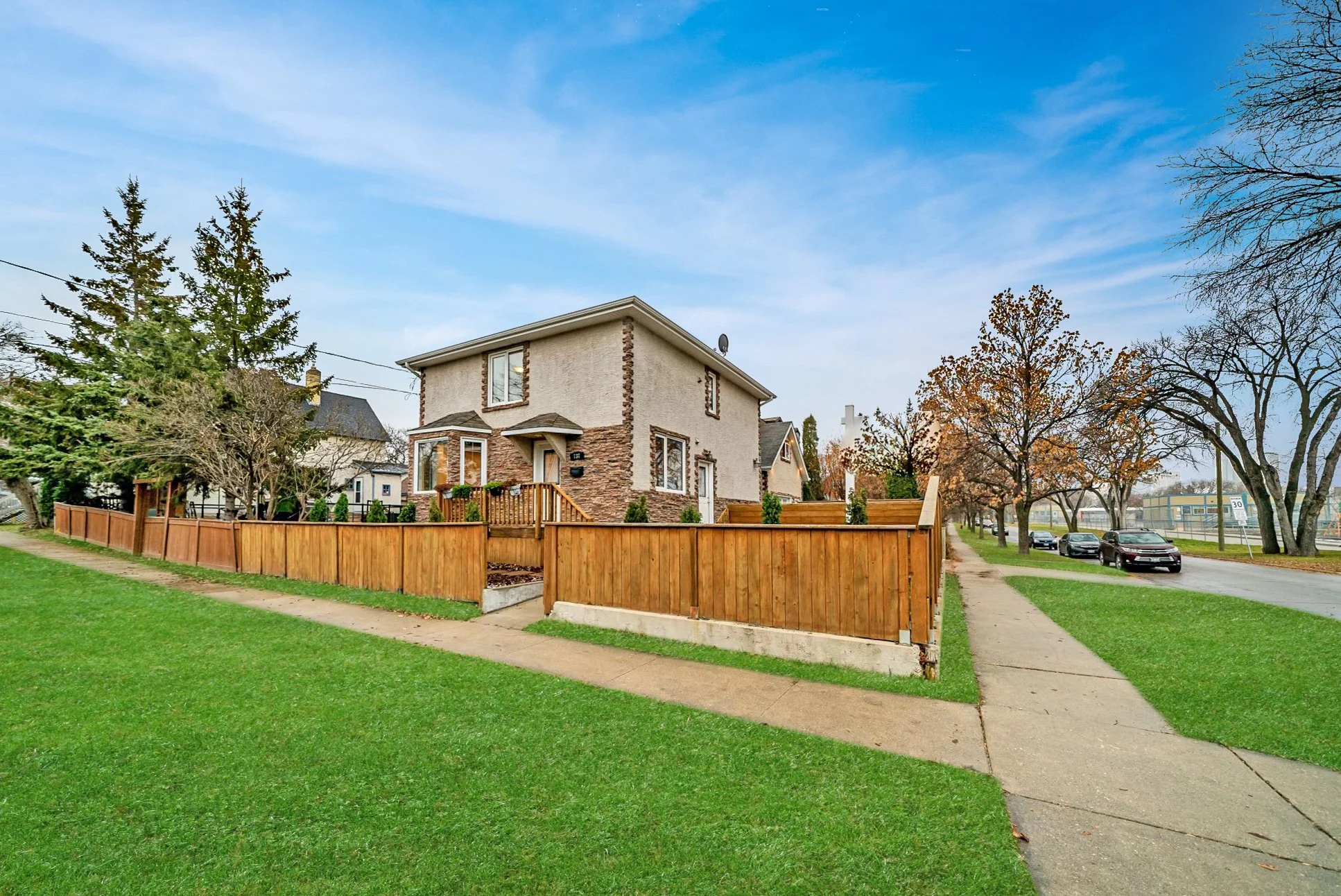
Image source: Amber van den Broek
This is particularly important if you’re:
- On a corner lot
- Building beside a driveway
- Extending fencing toward the street
- Replacing an existing front/side fence
- Adding landscaping around a fence
Don’t assume the seven-foot maximum applies to every inch of your lot.
Corner Lots Need Extra Attention
Corner lots can be tricky because you effectively have two street-facing sides.
A fence that seems completely reasonable from inside your backyard could interfere with visibility for traffic approaching the intersection.
For example, this type of layout needs more thought:
House → Backyard → Tall Privacy Fence → Sidewalk → Intersection
The closer the fence gets to the intersection, the more important the visibility rules become.
If you’re unsure whether part of your planned fence falls inside a visibility triangle, confirm the layout before installing the posts.
What About Fences Beside Driveways?
The same basic principle applies.
Imagine backing your vehicle out of a driveway while a seven-foot solid privacy fence runs directly beside you all the way to the sidewalk.
You wouldn’t be able to see someone walking down the sidewalk until your vehicle was already in their path.
That’s exactly the type of situation visibility restrictions are designed to prevent.
What About a Fence Gate?
A gate counts as part of the fence.
London’s by-law definition of a fence specifically includes gates.
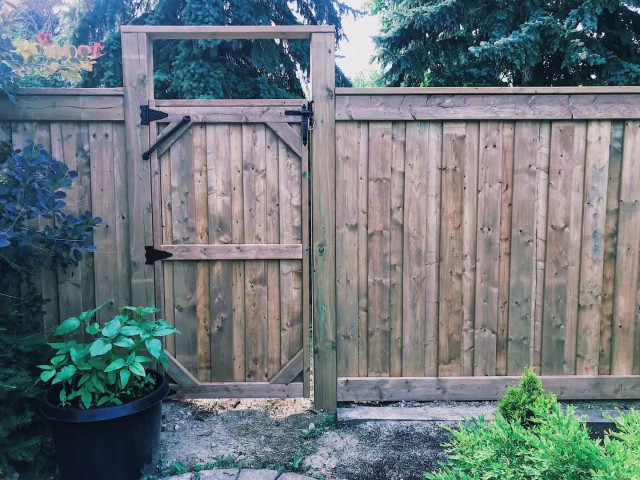
Image source: Poly Decoration Co. via Houzz
There is another interesting rule homeowners should know.
If your fence would otherwise block access to a required parking space, the by-law requires a gate at least:
2.59 metres (8.5 feet) wide
to provide access to that parking space.
That’s much wider than a normal walk-through backyard gate.
Fence Height vs Privacy Screen: They’re Not the Same Thing
Here’s where the rules get interesting.
A privacy screen is treated differently from a normal perimeter fence.
Under London’s by-law, a qualifying privacy screen can reach:
3 metres
or roughly:
9 feet 10 inches
That’s substantially taller than the normal seven-foot fence limit.
But you can’t simply call your entire backyard fence a “privacy screen” and build it nearly ten feet tall.
There are specific location and length requirements.
London Privacy Screen Rules
A privacy screen may be permitted in a side or rear yard when it meets requirements including:
| Requirement | Rule |
|---|---|
| Maximum Height | 3 m / 9 ft 10 in |
| Distance From Street Line | More than 4.5 m / 14 ft 9 in |
| Distance From Side Lot Line | Generally more than 1.2 m / 48 in |
| Distance From Rear Lot Line | More than 1.2 m / 48 in |
| Maximum Total Length | 12 m / 39 ft 4 in |
| Maximum Individual Length | 5 m / 16 ft 5 in |
There is an exception to the side-lot-line spacing requirement in certain situations involving dwelling units divided by a common wall.
The important takeaway is:
A privacy screen is intended as a localized visual barrier, not a loophole for building a 10-foot fence around your entire property.
When Would a Privacy Screen Make Sense?
Imagine you already have a normal six-foot fence.
But your neighbour has a raised deck that looks directly onto your patio.
Instead of rebuilding the entire fence taller, a privacy screen could potentially be used around the specific outdoor living area.
Common uses include:
- Hot tubs
- Patios
- Outdoor dining areas
- Deck seating areas
- Poolside lounging areas
- Outdoor kitchens
This can give you additional privacy exactly where you need it without turning the entire backyard into a wall.
Can You Build Higher Than 7 Feet?
Potentially, but don’t assume you can.
London’s Fence By-law allows the City to consider a minor exemption for increased fence height in certain circumstances.
Examples listed by the City include residential properties adjoining:
- Natural/open spaces
- Public walkways
- Trails
- Highways
- Commercial areas
- Industrial areas
The by-law also leaves room for other circumstances that the Director, Municipal Compliance or designate considers appropriate.
That doesn’t mean an eight-foot fence is automatically approved because you want more privacy.
It means there is an exemption process for circumstances where additional height may be justified.
Can You Put Lattice on Top of a 7-Foot Fence?
Be careful.
The maximum height applies to the fence as a whole.
So this:
7 ft solid fence + 1 ft lattice
doesn’t magically remain a seven-foot fence.
You’ve now created something approximately eight feet high.
A safer approach is to incorporate decorative lattice within the permitted overall height.
For example:
6 ft solid privacy section + 1 ft lattice = 7 ft total
That gives you the decorative appearance while staying within the normal maximum.
Does a Fence Post Cap Count?
Remember how London measures height to the highest point of the fence or posts?
That means you should account for the complete structure.
If you’re building right at the maximum height, decorative posts sticking significantly above the panels could create a problem.
This is another reason it’s often smarter to design slightly below the absolute maximum rather than trying to hit exactly 7’0″.
Can You Use Corrugated Metal for a Residential Fence?
Here’s another lesser-known London rule.
The City’s Fence By-law prohibits residential fences made from:
sheet metal or corrugated metal panel members.
That’s worth knowing because modern corrugated-metal fence designs are increasingly common online.
Something you find on Pinterest or Instagram isn’t automatically compliant with London’s rules.
If you want a modern appearance, there are plenty of other options:
- Horizontal wood
- Cedar
- Vinyl
- Composite
- Aluminum
- Hybrid fence systems
Does an Existing Taller Fence Have to Come Down?
Not necessarily.
London’s by-law contains provisions allowing certain existing fences to be deemed compliant if they existed before the relevant by-law and complied with the applicable regulations at the time.
However, there are exceptions, including visibility-triangle requirements.
So don’t assume:
“My neighbour has an eight-foot fence, therefore I can build one.”
Their fence may:
- Predate the current rules
- Have an exemption
- Fall under different circumstances
- Simply not be evidence of what you’re allowed to build
Base your project on the rules applying to your property.
How Tall Should a Fence Be for Dogs?
For many dogs, six feet is already substantial.
But height isn’t the only thing that matters.
Consider:
- Dog size
- Jumping ability
- Gaps underneath
- Board spacing
- Gate latches
- Digging
- Nearby objects the dog could climb
A seven-foot fence with a six-inch gap underneath is still a terrible dog fence for a small escape artist.
How Tall Should a Privacy Fence Be?
For a typical London backyard:
| Situation | Good Starting Point |
|---|---|
| Basic property separation | 4–5 ft |
| Normal backyard privacy | 6 ft |
| Strong privacy | 6–7 ft |
| Maximum normal residential height | 7 ft |
| Localized extra privacy | Consider compliant privacy screen |
Six feet is probably the sweet spot for many properties.
Seven feet becomes more useful when you’re dealing with difficult sightlines.
Taller Isn’t Always Better
This is something worth considering before automatically ordering the tallest fence possible.
A very tall solid fence can:
- Block sunlight
- Create more shade
- Make a small yard feel enclosed
- Increase wind load
- Require more material
- Increase the project cost
- Affect how landscaping feels
Sometimes a six-foot fence combined with trees, shrubs or a localized privacy screen creates a better backyard than seven-foot fencing everywhere.
Planning a New Fence in London?
Before construction, figure out:
- Where your property lines are
- How much fencing you need
- What height you actually need
- Whether you’re near a driveway visibility area
- Whether you’re on a corner lot
- How many gates you need
- What material you want
- Whether a localized privacy screen makes more sense
Then design the fence around those constraints.
If you’re in London, Ontario or the surrounding area, Decks And All installs custom residential privacy fences throughout the area.
Get a Free Fence Installation Estimate
Frequently Asked Questions
What is the maximum fence height in London Ontario?
For a typical residential fence, London’s Fence By-law sets the maximum height at 2.13 metres (7 feet).
Can I build an 8-foot fence in London Ontario?
Not as an ordinary residential fence under the standard rules. The normal maximum is seven feet. The City can consider minor exemptions for increased height in certain circumstances.
Can my backyard fence be 7 feet tall?
Generally, yes, subject to the rest of the Fence By-law and any other rules affecting the property.
How tall can a fence be beside a driveway?
A fence exceeding 0.9 metres (3 feet) cannot be located within a driveway visibility triangle. The exact location matters, not simply whether the fence is somewhere beside a driveway.
How tall can a fence be on a corner lot?
The normal residential maximum remains seven feet, but fencing inside a corner visibility triangle cannot exceed 0.9 metres (3 feet).
Can I add lattice above my fence?
You need to consider the total height. Adding lattice on top of an already seven-foot fence could push the complete structure beyond the normal permitted maximum.
Can a privacy screen be taller than my fence?
Potentially. A qualifying privacy screen can reach 3 metres (approximately 9 ft 10 in) under London’s by-law, but it must satisfy specific setback, location and length requirements.
Can I build a corrugated metal fence in London?
The City’s Fence By-law prohibits residential fences comprised of sheet metal or corrugated metal panel members.
Do fence posts count toward the maximum height?
Yes. The City’s definition measures to the highest point of the fence or posts.
Final Word
For most London homeowners, the fence-height rules are fairly straightforward:
| Question | Answer |
|---|---|
| Maximum normal residential fence | 7 ft |
| Maximum in visibility triangles | 3 ft |
| Maximum qualifying privacy screen | 9 ft 10 in |
| Can posts extend above 7 ft? | Not if that pushes the fence beyond the permitted height |
| Can you automatically build 8 ft for privacy? | No |
| Are taller-fence exemptions possible? | In certain circumstances |
If you’re simply building a backyard privacy fence, six to seven feet will cover most situations.
The bigger thing to watch is where the fence is located.
Driveways, corner lots, retaining walls, privacy screens and unusual property layouts can change what you’re allowed to build.
And if your goal is simply blocking one specific sightline, don’t automatically assume you need an extra-tall perimeter fence. A properly designed fence combined with a compliant privacy screen can sometimes create a much better result.
If you’re planning a new fence in London, Ontario, request a free fence estimate from Decks And All and design the height, style and layout around your actual property.