
If you’ve decided to build a wood fence, you’ll probably end up comparing the same two materials:
Cedar vs pressure-treated wood.
Both can build an excellent backyard privacy fence.
But they aren’t the same.
Pressure-treated wood is generally less expensive and extremely practical, while cedar costs more but gives you a cleaner, more premium natural appearance.
So is cedar actually worth spending the extra money?
For some homeowners, absolutely.
For others, pressure-treated is the smarter purchase.
Here’s how they compare.
Cedar vs Pressure-Treated Fence: Quick Answer
| Pressure-Treated | Cedar | |
|---|---|---|
| Upfront Cost | ★★★★★ | ★★★☆☆ |
| Appearance | ★★★☆☆ | ★★★★★ |
| Privacy | ★★★★★ | ★★★★★ |
| Rot Resistance | Excellent when properly rated | Naturally resistant |
| Dimensional Stability | Good | Excellent |
| Custom Designs | Excellent | Excellent |
| Maintenance | Moderate | Moderate |
| Best For | Value | Premium appearance |
Our quick recommendation:
Choose pressure-treated if you want a strong privacy fence at the best possible price.
Choose cedar if you’re willing to spend more because the appearance of the fence is an important part of your backyard design.
And there’s actually a third option that combines both.
We’ll get to that below.
What Is a Pressure-Treated Fence?
Pressure-treated lumber is wood that has been treated with preservatives designed to improve its resistance to decay, fungi and insects.
It’s one of the most common materials used for residential fences in Ontario.
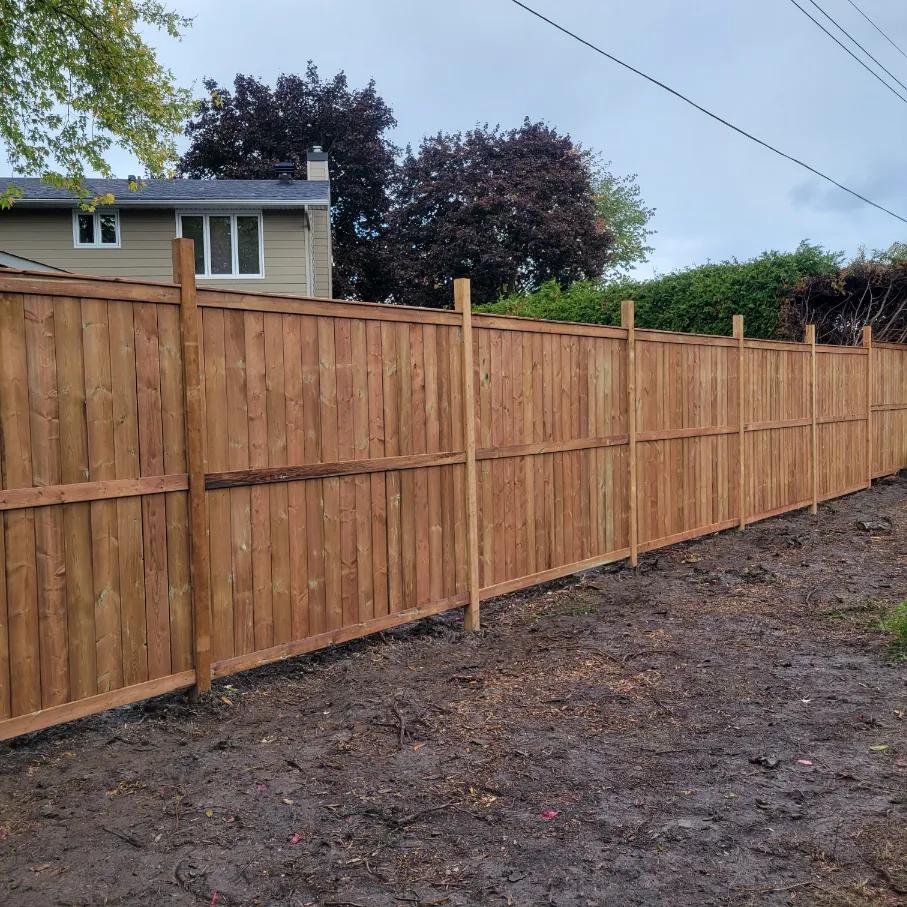
A pressure-treated fence can be built in almost any common wood fence style:
- Vertical privacy
- Horizontal
- Board-on-board
- Shadowbox
- Cap-and-trim
- Lattice-top
- Picket fencing
Its biggest advantage is simple:
You get a lot of fence for your money.
What Is a Cedar Fence?
Cedar is naturally resistant to decay and insects because of compounds within the wood itself.
Unlike pressure-treated lumber, it doesn’t rely on pressure-applied preservatives to provide that natural resistance.
But the biggest reason homeowners choose cedar usually isn’t chemistry.
It’s how it looks.
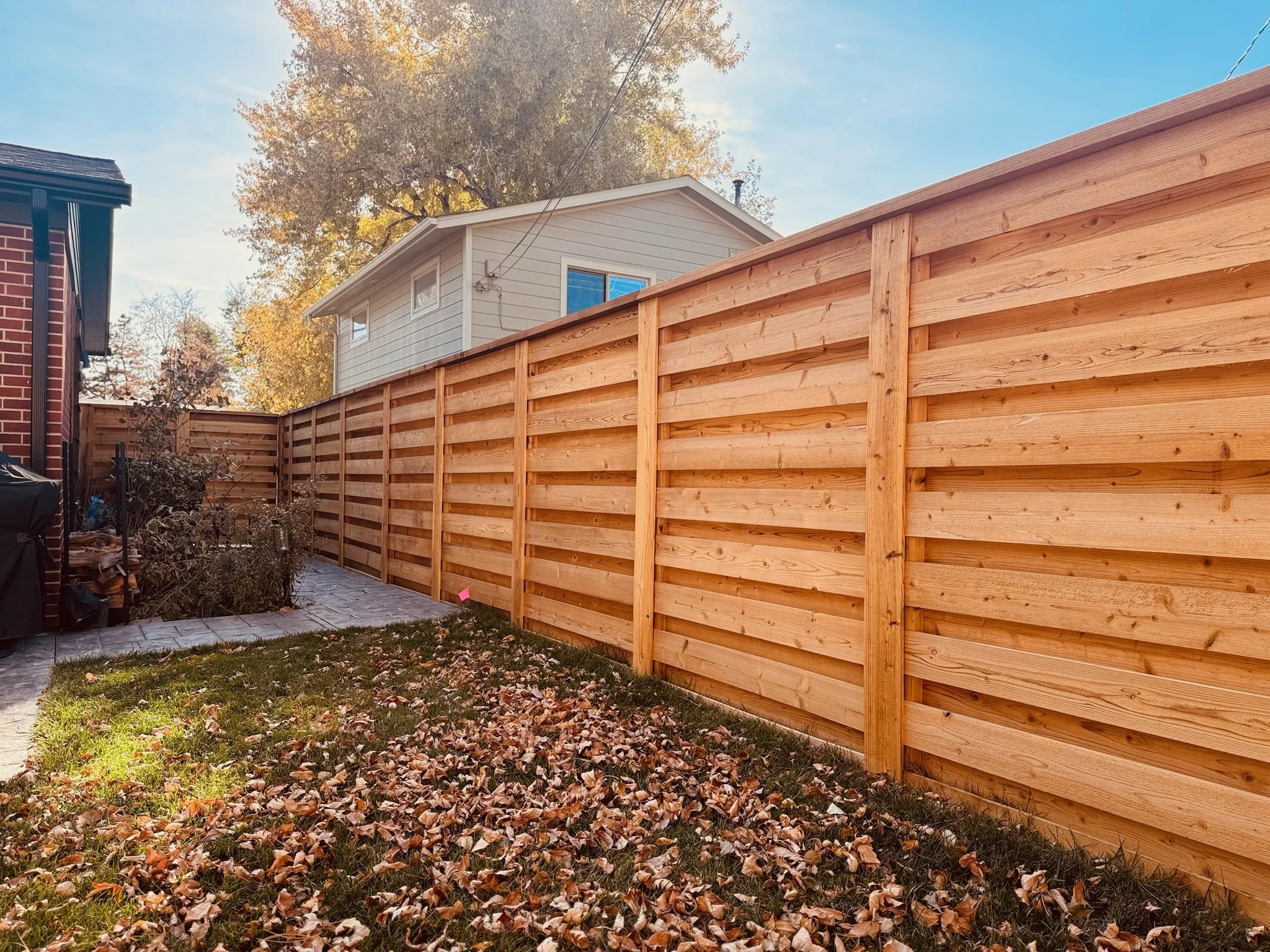
Cedar has a warm natural colour, attractive grain and generally cleaner appearance that works extremely well in landscaped backyards.

Cedar is especially popular for:
- Modern horizontal fences
- Premium privacy fences
- Highly visible backyards
- Pool areas
- Outdoor entertaining spaces
- Custom fence designs
If your fence is going to be a major visual feature of the backyard, cedar starts becoming much easier to justify.
The Biggest Difference: Price
Let’s deal with the obvious one first.
Pressure-treated wood is cheaper.
Current Ontario pricing guides generally place installed pressure-treated fencing below comparable cedar fencing.
A useful budgeting range is:
| Material | Approx. Installed Cost |
|---|---|
| Pressure-Treated | $30–$50+ per linear ft |
| Cedar | $40–$60+ per linear ft |
That difference doesn’t sound enormous until you multiply it across an entire backyard.
Example: 150-Foot Backyard
Imagine you need 150 linear feet of fencing.
| Material | Example @ Lower Range | Example @ Higher Range |
|---|---|---|
| Pressure-Treated | $4,500 | $7,500+ |
| Cedar | $6,000 | $9,000+ |
Suddenly, choosing cedar could mean spending $1,500–$3,000+ more on the same length of fence.
That’s real money.
So the question becomes:
What are you actually getting for that extra cost?
Appearance: Cedar Wins
This is probably cedar’s biggest advantage.
Fresh cedar has a warm, natural appearance that immediately looks more premium than most pressure-treated lumber.
The grain is attractive.
The colouring is attractive.
And it works extremely well with other premium backyard materials.
Think:
- Composite decking
- Black railings
- Pergolas
- Natural stone
- Concrete patios
- Outdoor kitchens
- Modern landscaping
A well-designed cedar fence can become part of the backyard rather than simply something surrounding it.
Pressure-Treated Doesn’t Have to Look Cheap
This is important.
Choosing pressure-treated lumber doesn’t mean your fence has to look basic.
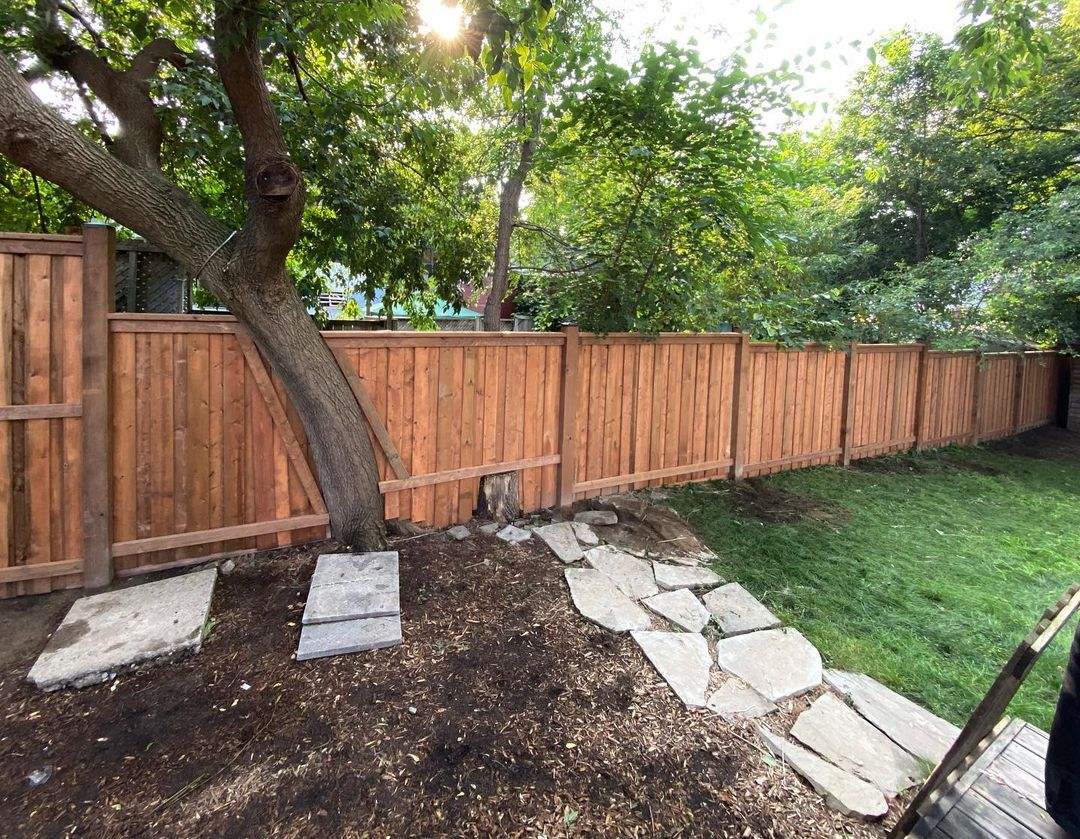
You can dramatically change the appearance with the fence design itself.
Instead of a basic vertical fence, consider:
- Horizontal boards
- Cap-and-trim
- Board-on-board
- Decorative top sections
- Black hardware
- Larger posts
- Custom gates
And once the lumber has properly dried, staining can completely change its appearance.
A well-built pressure-treated fence with good proportions can look considerably more expensive than the material actually is.
Which One Lasts Longer?
This question is more complicated than people make it sound.
You’ll find claims online saying cedar always lasts longer.
You’ll also find claims saying pressure-treated always lasts longer.
In reality, installation and maintenance matter enormously.
Ontario sources generally put both materials into roughly the same broad long-term category when they’re installed and maintained correctly, although pressure-treated lumber has an important advantage when used in direct ground contact.
A reasonable expectation is:
| Material | Potential Service Life |
|---|---|
| Pressure-Treated | Roughly 15–25+ years |
| Cedar | Roughly 15–25+ years |
These aren’t guarantees.
A badly installed premium fence can fail before a properly installed inexpensive fence.
The Posts Matter More Than Most Homeowners Realize
This might be the most important part of this entire article.
Your beautiful fence boards aren’t what hold the fence up.
The posts do.
Fence posts have to deal with:
- Wet soil
- Freeze-thaw cycles
- Wind loads
- Concrete
- Ground moisture
- Years of seasonal movement
Pressure-treated lumber specifically rated for ground contact has an important advantage here.
That’s why many Canadian fence builders use pressure-treated posts even when the visible portion of the fence is cedar.
The Smart Hybrid Fence
Here’s an option many homeowners don’t realize exists:
Pressure-treated posts + cedar fence boards.
You don’t necessarily have to choose 100% cedar or 100% pressure-treated.
A hybrid build gives you:
Below/structural areas: Pressure-treated lumber
Visible fence boards: Cedar
That can provide the ground-contact durability of pressure-treated lumber while keeping cedar where you’ll actually see it.
Hybrid vs All Cedar vs All Pressure-Treated
| Build | Price | Appearance | Practicality |
|---|---|---|---|
| All Pressure-Treated | $ | Good | Excellent |
| PT Posts + Cedar Boards | $$ | Excellent | Excellent |
| All Cedar | $$$ | Excellent | Good |
For homeowners who really like cedar but don’t necessarily need every structural component made from cedar, the hybrid approach is worth asking about.
Which One Warps Less?
Cedar generally has the advantage.
Cedar is known for being relatively dimensionally stable.
That means it tends to experience less twisting, warping and movement compared with lower-grade pressure-treated lumber.
This matters particularly with designs where every line is highly visible.
For example:
Horizontal fences.
When boards run horizontally across a long fence, a badly warped board can become very noticeable.
That’s one reason cedar is so popular for modern horizontal fencing.
But Lumber Quality Matters Too
Don’t compare the absolute best cedar board against the absolute worst pressure-treated board.
The grade and quality of the lumber matter.
Look at:
- Knots
- Cracks
- Straightness
- Grain
- Moisture
- Board thickness
- Overall lumber grade
A contractor carefully selecting straight pressure-treated boards can produce a better-looking fence than someone carelessly building with poor-quality cedar.
Material matters. Craftsmanship matters too.
What Happens When Cedar Ages?
Here’s something homeowners sometimes don’t realize.
That beautiful warm cedar colour doesn’t stay exactly the same forever.
Without a finish that preserves the colour, cedar naturally weathers toward a silver-grey appearance.
Some homeowners love that.
Others don’t.
If you want cedar to retain more of its original warm colouring, expect to maintain the finish.
What Happens When Pressure-Treated Wood Ages?
Pressure-treated lumber changes too.
Fresh pressure-treated lumber can have a greenish or brown appearance depending on the treatment and product.
As it dries and weathers, that colour changes.
Eventually, an unmaintained wood fence can become grey and weathered.
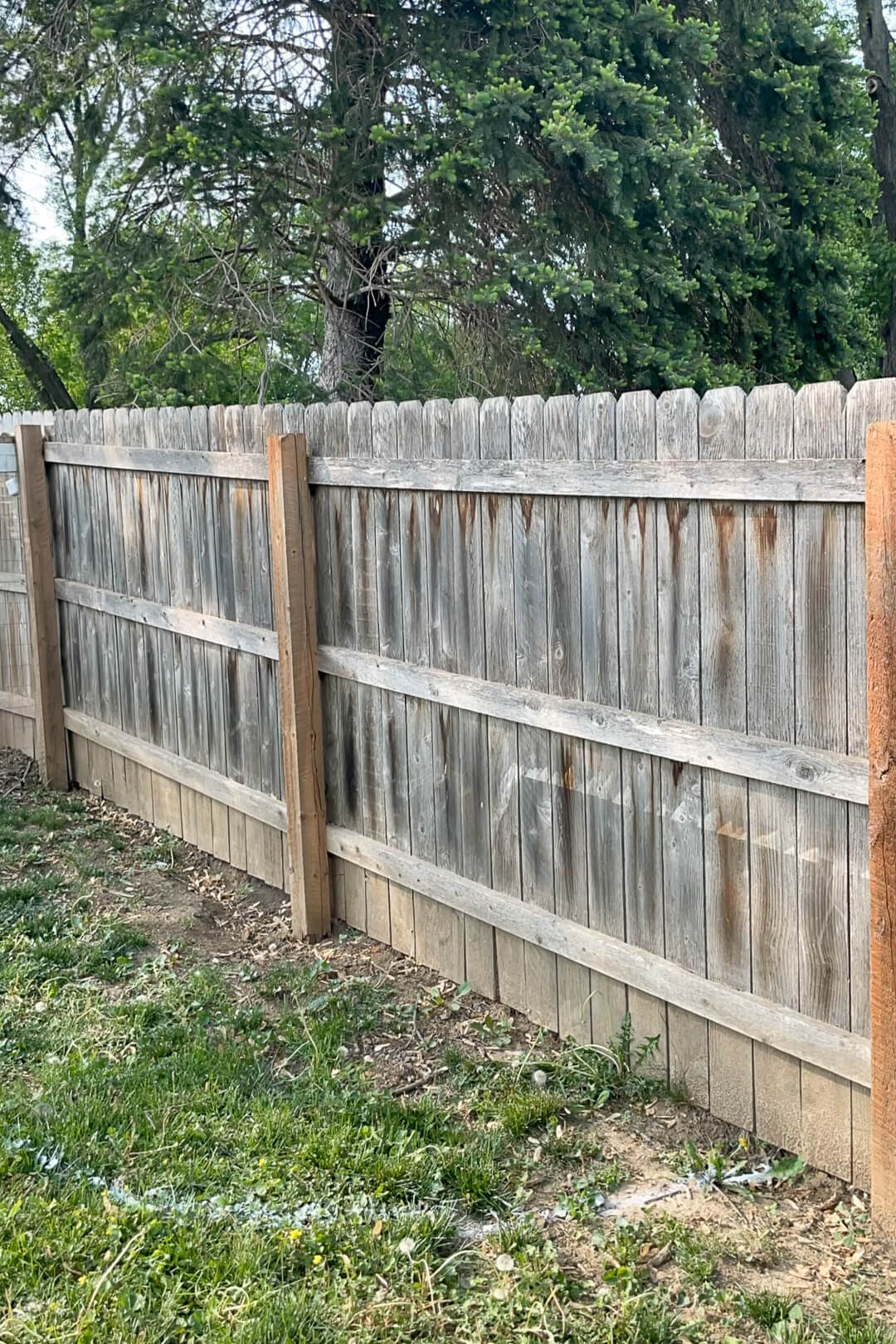
Image source: Crystel Montenegro Home
That doesn’t automatically mean the fence is structurally bad.
Wood naturally changes appearance outdoors.
If you want to maintain a specific colour, staining and sealing become part of fence ownership.
Maintenance: Neither Is Completely Maintenance-Free
If you want genuinely minimal maintenance, you should probably be comparing vinyl or composite, not two types of wood.
Both cedar and pressure-treated fences benefit from periodic maintenance.
That can include:
- Cleaning
- Inspecting boards
- Checking posts
- Replacing damaged boards
- Staining
- Sealing
- Adjusting gates
Maintenance Comparison
| Maintenance | Pressure-Treated | Cedar |
|---|---|---|
| Cleaning | Yes | Yes |
| Inspection | Yes | Yes |
| Staining for appearance | Optional | Recommended if preserving colour |
| Sealing | Beneficial | Beneficial |
| Board replacement | Eventually | Eventually |
| Completely maintenance-free | No | No |
If your expectation is:
“I want to install it and never think about it again.”
Neither material is perfect for that.
Which Is Better for Ontario Winters?
Both materials can perform well in Ontario.
The more important factor is how the fence is constructed.
Our climate means a fence has to deal with:
- Snow
- Rain
- Freeze-thaw cycles
- Summer humidity
- Wind
- Ground movement
A properly constructed pressure-treated fence can handle those conditions very well.
So can cedar.
But once again, posts and drainage matter.
The most expensive cedar boards in the world won’t save a fence with poorly installed posts.
Which Is Better for Privacy?
It’s a tie.
Privacy comes from fence design, not whether the board is cedar or pressure-treated.
Both can build:
- 6-foot privacy fencing
- Board-on-board fences
- Horizontal privacy fences
- Cap-and-trim fences
- Decorative privacy fences
If maximum privacy is your priority, look at the board layout rather than simply the wood species.
Which Is Better for a Modern Fence?
This is where I’d give cedar the advantage.
Especially for horizontal designs.

Cedar’s cleaner grain and natural colouring work extremely well with modern architecture.
Pair it with:
- Black posts
- Black gates
- Black railings
- Composite decking
- Concrete
- Modern landscaping
and the result can look extremely sharp.
Pressure-treated can absolutely be built horizontally too, particularly if you’re planning to stain it.
Which Is Better for a Rental Property?
Pressure-treated.
For most rental properties, I’d have a difficult time justifying the cedar premium unless appearance is unusually important.
Pressure-treated gives you:
- Privacy
- Durability
- Lower upfront cost
- Easy board replacement
- Lots of design options
That’s usually exactly what a rental property needs.
Which Is Better Around a Nice Deck?
This depends on the deck.
If you’ve invested heavily into a premium composite deck, landscaping, pergola and patio, cedar may make sense because the fence becomes part of the overall design.
If you have a straightforward pressure-treated deck, matching it with pressure-treated fencing can create a consistent appearance without unnecessarily increasing the budget.
Cedar vs Pressure-Treated by Homeowner Type
| If This Sounds Like You… | We’d Start With… |
|---|---|
| “I want the cheapest good privacy fence.” | Pressure-Treated |
| “I want it to look premium.” | Cedar |
| “I’m building a modern backyard.” | Cedar |
| “This is a rental property.” | Pressure-Treated |
| “I need 200+ feet of fencing.” | Pressure-Treated |
| “The fence is beside my outdoor entertaining area.” | Cedar |
| “I want cedar but don’t want to go crazy on cost.” | PT Posts + Cedar Boards |
| “I hate wood maintenance.” | Consider Vinyl/Composite |
Is Cedar Worth the Extra Money?
Here’s the easiest way to decide.
If you’re looking at the fence primarily as a functional boundary, cedar probably isn’t necessary.
Pressure-treated wood already gives you:
- Privacy
- Security
- Durability
- Customization
- Good appearance
But if the fence will be visible from your deck, patio, pool, kitchen windows or outdoor entertaining space every single day, you’re not only buying a boundary.
You’re buying part of the backyard’s appearance.
In that situation, paying extra for cedar becomes much easier to justify.
What Would We Choose?
For the average London, Ontario homeowner looking for a traditional backyard privacy fence:
Pressure-treated wood offers excellent value.
For someone completing a premium backyard renovation where appearance is a major priority:
Cedar gets our vote.
And if you want the best combination of the two:
Ask about pressure-treated structural components with cedar visible boards.
Want to Compare Both on Your Actual Backyard?
Online comparisons are useful, but the cost difference becomes much easier to understand when you’re looking at your actual fence length.
For example, a $10-per-foot difference means:
| Fence Length | Difference |
|---|---|
| 50 ft | $500 |
| 100 ft | $1,000 |
| 150 ft | $1,500 |
| 200 ft | $2,000 |
| 250 ft | $2,500 |
A material upgrade that seems small per foot can become a significant decision across a large property.
If you’re in London, Ontario or the surrounding area, Decks And All can quote your fence based on the actual property, design and materials.
Frequently Asked Questions
Is cedar better than pressure-treated wood for a fence?
Not universally. Cedar generally offers a more premium natural appearance and better dimensional stability, while pressure-treated lumber usually provides better value and is particularly useful for components exposed to ground contact.
Which is cheaper, cedar or pressure-treated fencing?
Pressure-treated fencing is generally cheaper. Current Ontario pricing guides commonly put pressure-treated wood below cedar on a per-linear-foot basis.
Does cedar last longer than pressure-treated wood?
Both can last for many years when properly installed and maintained. Installation quality, ground contact, drainage, lumber grade and maintenance can matter just as much as the species itself.
Can I use pressure-treated posts with cedar boards?
Yes. Combining pressure-treated structural components with visible cedar boards can be an excellent way to balance durability, appearance and cost.
Does cedar turn grey?
Yes. Cedar naturally weathers toward a silver-grey colour when left exposed. Maintaining its warmer original colour generally requires an appropriate finish and periodic maintenance.
Can pressure-treated fencing be stained?
Yes, but new pressure-treated lumber should be sufficiently dry before applying a stain or finish. Follow the coating manufacturer’s moisture and preparation requirements.
Which is better for horizontal fencing?
Both can work, but cedar is particularly attractive for horizontal designs because of its appearance and dimensional stability.
Which wood fence is best for Ontario?
For overall value, pressure-treated wood is difficult to beat. For a more premium appearance, cedar is an excellent option. The best choice depends on your budget, fence design and how important appearance is to the project.
Final Word
The cedar vs pressure-treated debate doesn’t have one universal winner.
It comes down to what you’re buying the fence for.
| Priority | Winner |
|---|---|
| Lowest upfront cost | Pressure-Treated |
| Premium appearance | Cedar |
| Ground-contact components | Pressure-Treated |
| Modern horizontal design | Cedar |
| Budget-friendly privacy | Pressure-Treated |
| High-end backyard | Cedar |
| Balance of both | Hybrid Build |
If you simply want a strong, attractive privacy fence without overspending, pressure-treated wood is an excellent choice.
If you’re investing in the appearance of your backyard and want the fence itself to become part of the design, cedar can absolutely be worth the premium.
And you don’t necessarily have to choose one material for the entire fence.
A thoughtfully designed combination of pressure-treated structural lumber and cedar visible boards can give you many of the advantages of both.
If you’re planning a new fence in London, Ontario, request a free fence estimate from Decks And All and compare the options on your actual property.