
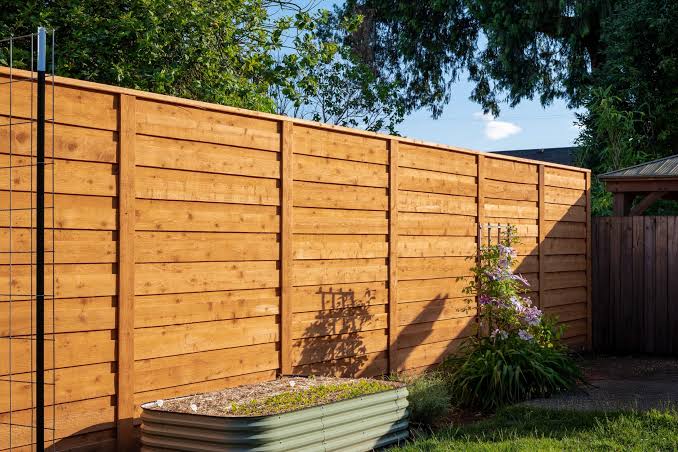

If you need roughly 100 feet of new fencing, you can get a surprisingly good idea of your budget before a contractor ever visits your property.
In Ontario, a professionally installed 100-foot fence can cost anywhere from roughly $2,500 to $10,000+ depending on what you build.
For the typical homeowner looking for a backyard privacy fence, $3,500–$8,500 is a more useful starting budget.
The biggest factor?
Material.
A basic chain link fence and a custom cedar privacy fence may cover exactly the same 100 feet, but their final prices can be thousands of dollars apart.
Quick Answer: 100-Foot Fence Cost in Ontario
| Fence Type | Approx. Installed Cost / Ft | Approx. 100-Ft Cost | Best For |
|---|---|---|---|
| Chain Link | $15–$40 | $1,500–$4,000 | Lowest cost |
| Pressure-Treated Wood | $30–$55 | $3,000–$5,500 | Affordable privacy |
| Cedar | $45–$85 | $4,500–$8,500 | Premium wood |
| Vinyl / PVC | $45–$85 | $4,500–$8,500 | Low maintenance |
| Aluminum | $45–$90+ | $4,500–$9,000+ | Open & decorative |
| Composite | $55–$95+ | $5,500–$9,500+ | Premium modern privacy |
For a typical 6-foot backyard privacy fence, budgeting around $4,000–$8,500 for 100 feet is a reasonable place to start.
These are budgeting ranges rather than quotes. Gates, demolition, fence height, difficult soil, slopes, access and custom designs can all change the final number.
What Does 100 Feet of Fence Actually Look Like?
100 linear feet doesn’t necessarily mean your backyard is 100 feet wide.
Imagine a backyard with:
| Section | Length |
|---|---|
| Back property line | 40 ft |
| Left side | 30 ft |
| Right side | 30 ft |
| Total | 100 ft |
That’s a 100-linear-foot fence project.
Fence contractors generally price using the total horizontal length of the fence rather than the square footage of your yard.
1. Pressure-Treated Wood: About $3,000–$5,500
For homeowners who want full backyard privacy without jumping into premium materials, pressure-treated wood is usually one of the first options worth pricing.
Pressure-treated wood is popular because it provides:
- Excellent privacy
- Lots of design options
- Easy customization
- A traditional backyard appearance
- Lower upfront cost than many premium systems
It can be built vertically, horizontally, board-on-board, cap-and-trim, or with decorative sections.
100-Foot Pressure-Treated Cost
| Price Per Foot | 100-Foot Cost |
|---|---|
| $30/ft | $3,000 |
| $40/ft | $4,000 |
| $45/ft | $4,500 |
| $50/ft | $5,000 |
| $55/ft | $5,500 |
Best value for: Homeowners who primarily want privacy and don’t mind maintaining wood over time.
2. Cedar: About $4,500–$8,500
Cedar takes the basic idea of a wood privacy fence and gives it a more premium natural appearance.
For approximately 100 feet:
| Cedar Fence | Approximate Cost |
|---|---|
| Lower end | $4,500 |
| Mid-range | $6,500 |
| Premium end | $8,500+ |
Cedar works particularly well for:
- Horizontal fences
- Premium privacy fences
- Board-on-board designs
- Cap-and-trim fences
- Modern backyard renovations
The grain and natural colour give cedar a noticeably different appearance from standard pressure-treated lumber.
Pressure-Treated vs Cedar
| Feature | Pressure-Treated | Cedar |
|---|---|---|
| Upfront Price | Lower | Higher |
| Privacy | Excellent | Excellent |
| Natural Appearance | Good | Excellent |
| Custom Designs | Excellent | Excellent |
| Maintenance | Moderate | Moderate |
| Best For | Value | Premium appearance |
If your priority is simply getting privacy at a reasonable price, pressure-treated lumber will usually make more sense.
If the finished appearance is a major priority, cedar becomes much more attractive.
3. Vinyl: About $4,500–$8,500
Don’t want to stain a wood fence every few years?
Vinyl becomes much more interesting.
Vinyl gives homeowners:
- Full privacy
- No staining
- No painting
- No wood rot
- Easy cleaning
- Consistent appearance
- Very little routine maintenance
A 100-foot vinyl privacy fence could fall roughly around:
$4,500–$8,500 installed
Wood vs Vinyl at 100 Feet
| Feature | Pressure-Treated | Vinyl |
|---|---|---|
| Approx. 100-ft Cost | $3,000–$5,500 | $4,500–$8,500 |
| Privacy | Excellent | Excellent |
| Maintenance | Moderate | Low |
| Natural Appearance | Excellent | Moderate |
| Needs Staining | Eventually | No |
| Wood Rot | Possible | No |
Vinyl isn’t automatically better than wood.
You’re essentially deciding whether you would rather pay less upfront and maintain wood, or pay more upfront for a lower-maintenance fence system.
4. Chain Link: About $1,500–$4,000
If privacy isn’t important, the price can drop dramatically.
For approximately 100 feet:
$1,500–$4,000 installed
That makes chain link one of the cheapest ways to create a physical boundary around a property.
It’s particularly practical for:
- Dogs
- Side yards
- Large lots
- Rental properties
- Commercial properties
- Utility areas
Black-coated chain link can also look considerably less industrial than traditional galvanized fencing.
Chain Link: Pros & Cons
| Advantages | Disadvantages |
|---|---|
| Low upfront cost | Almost no privacy |
| Low maintenance | Less premium appearance |
| Great for pets | Completely see-through |
| Good for long fence runs | Limited design options |
| Practical | Doesn’t create a privacy wall |
Best for: Homeowners who need a boundary more than they need privacy.
5. Aluminum: About $4,500–$9,000+
Aluminum fencing serves a different purpose from a solid wood or vinyl privacy fence.
Rather than visually closing off your property, it provides a physical boundary while keeping the yard open.
For approximately 100 feet, expect somewhere around:
$4,500–$9,000+
Aluminum is commonly considered for:
- Pool areas
- Landscaped properties
- Gardens
- Modern homes
- Properties backing onto green space
- Decorative front or side-yard fencing
Black aluminum is especially popular because the thin dark pickets tend to visually blend into the background.
Best for: Homeowners who want a premium boundary without blocking their view.
6. Composite: About $5,500–$9,500+
At the premium end of the privacy-fence market, you’ll find composite and hybrid systems.
A 100-foot project can land around:
$5,500–$9,500+
These systems can combine:
- Composite boards
- Aluminum posts
- Aluminum framing
- Decorative panels
- Modern horizontal designs
Composite is particularly attractive when the fence is part of a larger modern backyard renovation.
Which Material Gives You the Most for $5,000?
Let’s say $5,000 is your maximum fence budget.
Here’s roughly where that puts you:
| Material | What $5,000 Means |
|---|---|
| Chain Link | Strong budget for 100 ft |
| Pressure-Treated | Realistic for many 100-ft projects |
| Cedar | Lower-to-middle range |
| Vinyl | Lower end |
| Aluminum | Lower end |
| Composite | Likely requires additional budget |
If you have $5,000 and need privacy, pressure-treated wood is usually one of the first materials worth pricing.
If privacy isn’t necessary, chain link can stretch the same budget much further.
But Wait — What About Gates?
This is where the simple 100 ft × price-per-foot calculation starts becoming less accurate.
A gate isn’t simply another section of fence.
A gate requires:
- Hinges
- Latch hardware
- Additional framing
- Strong support posts
- Additional labour
- Careful alignment
A standard walk-through gate can add hundreds of dollars to the project depending on its material and construction.
A large double gate or equipment-access gate can add considerably more.
Example: The “$5,000 Fence” That Isn’t $5,000
Suppose your base fence costs exactly $5,000.
Then the extras begin:
| Item | Cost |
|---|---|
| 100 ft fence @ $50/ft | $5,000 |
| Walk-through gate | + $600 |
| Existing fence removal | + $700 |
| Difficult excavation | + $400 |
| Actual Project | $6,700 |
That’s why an online price-per-foot estimate should be treated as a budgeting tool, not a final quote.
Old Fence Removal Can Add Hundreds
Are contractors arriving at an empty property line?
Or do they first have to remove 100 feet of old fence?
Those are completely different jobs.
Removing an existing fence can involve:
- Removing hundreds of boards
- Pulling old posts
- Extracting concrete footings
- Loading debris
- Disposal
- Cleanup
For example, if removal costs somewhere between $5 and $15 per foot:
| Removal Cost | 100-Ft Total |
|---|---|
| $5/ft | $500 |
| $10/ft | $1,000 |
| $15/ft | $1,500 |
Always check whether demolition and disposal are included in your quote.
Why Can Two 100-Foot Fences Cost Thousands Apart?
Consider these two projects.
Property A — Easy Installation
- Flat backyard
- Easy equipment access
- No existing fence
- One standard gate
- Straight property lines
- Pressure-treated wood
Property B — Difficult Installation
- Sloped backyard
- Narrow access
- 100 ft of old fence to remove
- Three gates
- Tree roots
- Several corners
- Premium cedar
Both homeowners need exactly 100 linear feet.
But Property B could cost dramatically more.
The 8 Biggest Things That Change Fence Cost
| Cost Factor | Impact |
|---|---|
| Material | Very High |
| Fence height | High |
| Fence style | High |
| Gates | High |
| Old fence removal | Medium |
| Sloped terrain | Medium |
| Ground conditions | Medium |
| Backyard access | Medium |
Material is usually the biggest starting variable, but complicated site conditions can quickly push an otherwise affordable fence upward.
What’s the Cheapest 100-Foot Fence?
Here’s the easiest way to think about it.
| Your Priority | Best Starting Option | Approx. 100-Ft Budget |
|---|---|---|
| Cheapest boundary | Chain Link | $1,500–$4,000 |
| Affordable privacy | Pressure-Treated | $3,000–$5,500 |
| Premium natural wood | Cedar | $4,500–$8,500 |
| Low maintenance privacy | Vinyl | $4,500–$8,500 |
| Open premium fence | Aluminum | $4,500–$9,000+ |
| Modern premium privacy | Composite | $5,500–$9,500+ |
For the average homeowner who wants privacy without spending unnecessarily, pressure-treated wood is difficult to ignore.
Cedar makes sense when appearance matters more.
Vinyl makes sense when maintenance matters more.
Chain link makes sense when price matters more than privacy.
Composite makes sense when you’re building a premium modern backyard and want the fence to be part of the overall design.
Can You Split the Cost With Your Neighbour?
Potentially.
If part of the fence runs along a shared property boundary and both homeowners want it replaced, you may decide together to share some or all of the cost.
For example:
| Shared Fence | Total Project | Example 50/50 Split |
|---|---|---|
| 40 ft | $2,000 | $1,000 each |
| 60 ft | $3,600 | $1,800 each |
| 80 ft | $4,800 | $2,400 each |
But don’t simply build the fence and assume your neighbour will reimburse half.
Discuss the location, material, height, style, contractor and price before construction begins.
How Do You Measure Your Fence?
Measure the actual fence line, not the square footage of your property.
For example:
| Fence Section | Measurement |
|---|---|
| Back | 42 ft |
| Left | 31 ft |
| Right | 27 ft |
| TOTAL | 100 ft |
Then mark the approximate location and width of each gate.
That gives a contractor enough information for an initial conversation, although final measurements should be taken before the project is quoted and built.
How Long Does 100 Feet of Fence Take to Install?
For a relatively straightforward residential project, 100 feet isn’t an unusually large fence.
A professional crew may be able to complete a straightforward residential fence within a few working days, while complicated projects can take longer.
| Condition | Likely Effect |
|---|---|
| Existing fence | Adds demolition time |
| Multiple gates | More framing & alignment |
| Tree roots | Slower post excavation |
| Rocky soil | Slower post excavation |
| Narrow access | More manual labour |
| Significant slope | More layout work |
| Custom design | More carpentry |
DIY vs Professional Installation
Could you build a 100-foot fence yourself?
Absolutely.
But installing the boards isn’t usually the hardest part.
The important work starts underneath them.
You need to get:
- Property lines right
- Layout right
- Post spacing right
- Post depth right
- Posts aligned
- Concrete right
- Grade transitions right
- Gates properly supported
For someone comfortable with construction, DIY can save a meaningful amount of labour.
For everyone else, getting the posts wrong can turn an inexpensive DIY project into a leaning fence surprisingly quickly.
Want an Exact Price for Your 100-Foot Fence?
Online averages are great for answering:
“Am I looking at $2,000 or $10,000?”
They aren’t great at telling you exactly what your backyard will cost.
If you’re in London, Ontario or the surrounding area, Decks And All installs residential privacy fences and custom fencing throughout the area.
Your actual quote can account for:
- Measurements
- Fence style
- Material
- Gates
- Existing fence
- Access
- Property conditions
Get a Free Fence Installation Estimate
Frequently Asked Questions
How much does a 100-foot fence cost in Ontario?
Depending on the material, a 100-foot fence can range from roughly $1,500 for basic chain link at the low end to $9,500+ for premium residential fencing. For a typical backyard privacy fence, roughly $3,500–$8,500 is a more useful starting budget.
How much does 100 feet of wood fence cost?
Pressure-treated wood can run roughly $3,000–$5,500 for 100 feet, while cedar can be closer to $4,500–$8,500 depending on the style and installation.
How much does a 100-foot privacy fence cost?
For common privacy materials such as pressure-treated wood, cedar or vinyl, expect roughly $3,000–$8,500+ for 100 feet.
What is the cheapest fence for 100 feet?
Chain link is generally one of the least expensive professionally installed options. If you need a solid privacy fence, pressure-treated wood is usually one of the more affordable starting points.
Does a gate count as part of the 100 feet?
The gate opening is part of the overall fence line, but gates generally cost more than an equivalent section of ordinary fence because they require hinges, latches, framing, stronger support and additional labour.
Does the price include removing my old fence?
Not necessarily. Ask your contractor whether demolition, concrete-footing removal, hauling and disposal are included in the quoted price.
Final Word
So, how much does a 100-foot fence cost?
Here’s the simplest breakdown:
| If You Want… | Consider… | Approx. 100-Ft Budget |
|---|---|---|
| Cheapest boundary | Chain Link | $1,500–$4,000 |
| Affordable privacy | Pressure-Treated | $3,000–$5,500 |
| Premium wood | Cedar | $4,500–$8,500 |
| Low maintenance | Vinyl | $4,500–$8,500 |
| Open premium fence | Aluminum | $4,500–$9,000+ |
| Modern premium privacy | Composite | $5,500–$9,500+ |
For most homeowners looking for a traditional backyard privacy fence, $3,500–$8,500 is a sensible initial budget for approximately 100 feet.
But length is only one part of the quote.
Your material, height, design, gates, old fence, terrain, soil and backyard access ultimately determine what the project will cost.
If you’re planning a new fence in London, Ontario, request a free fence estimate from Decks And All and get a price based on your actual backyard rather than an online average.